
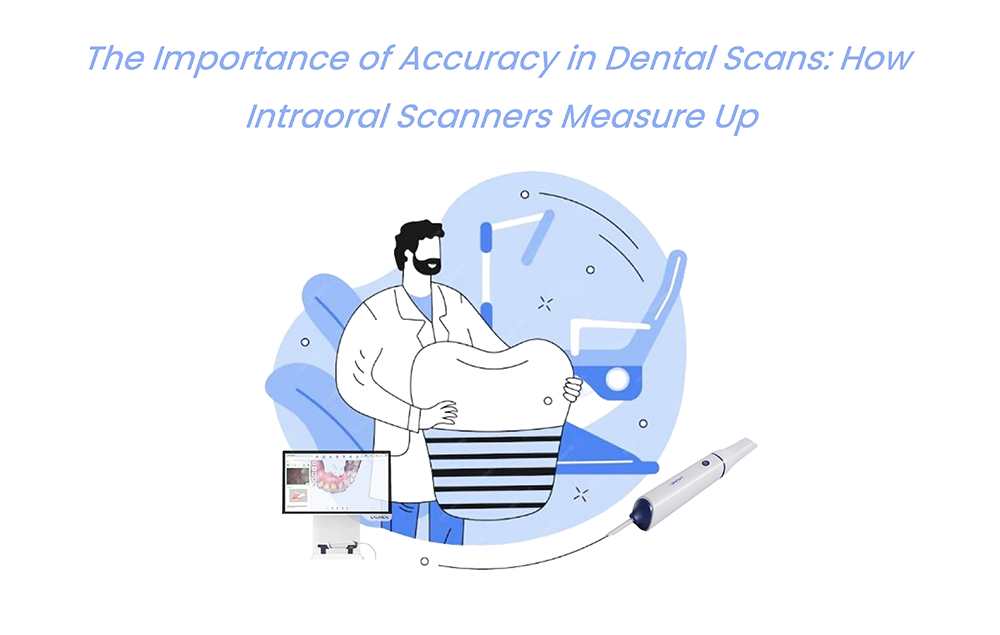
The Importance of Accuracy in Dental Scans: How to Take Measurements with Intraoral Scanners?
Accurate dental scans are crucial to creating effective treatment plans, ensuring patient comfort, and delivering the best results. In this blog, we will explore the importance of accuracy in dental scans and how intraoral scanners are setting new standards in the dental industry.
The Role of Accuracy in Dental Procedures
Accuracy in dental scans is critical for several reasons:
Treatment Planning: Precise scans are the basis of effective treatment plans. For orthodontics, restorative dentistry or implantology, accurate data ensures that every step of the treatment is well planned and executed.
Patient Comfort: Accurate scans minimize patient discomfort and time spent in the chair by reducing the need for re-images and adjustments. This leads to a smoother and more enjoyable experience for patients.
Efficiency: High accuracy reduces the need for multiple appointments and adjustments, making the treatment process more efficient for both the dentist and the patient.
How Do Intraoral Scanners Achieve High Accuracy?
Intraoral scanners achieve high accuracy thanks to several advanced technologies:
High-Resolution Imaging: These scanners use high-resolution cameras and laser technology to capture the intricate details of dental anatomy. The images are then compiled into a precise 3D model.
Real-Time Visualization: Dentists can view scans in real-time, allowing immediate evaluation and adjustment. This ensures all necessary details are accurately captured.
Advanced Software: The software processes the images and creates a highly detailed 3D model. This model can be used to design custom dental restorations and devices with a high degree of accuracy.
Integration with CAD/CAM Technology: Intraoral scanners integrate seamlessly with CAD/CAM (Computer Aided Design and Computer Aided Manufacturing) systems, allowing precision dental restorations to be created directly from digital scans.
Effect on Dentistry Practices and Patient Care
The use of intraoral scanners has a profound impact on dental practice and patient care:
Improved Diagnosis and Treatment Planning: With accurate and detailed scans, dentists can diagnose problems more effectively and create precise treatment plans.
Improved Patient Communication: Digital scans can be easily shared with patients, helping them understand dental problems and recommended treatments.
Streamlined Workflow: The digital nature of intraoral scans simplifies the workflow from taking impressions to creating restorations, leading to increased efficiency in dental practices.